1940s: A new industry begins
The 1946 UK Atomic Energy Act and the beginning of the nuclear industry
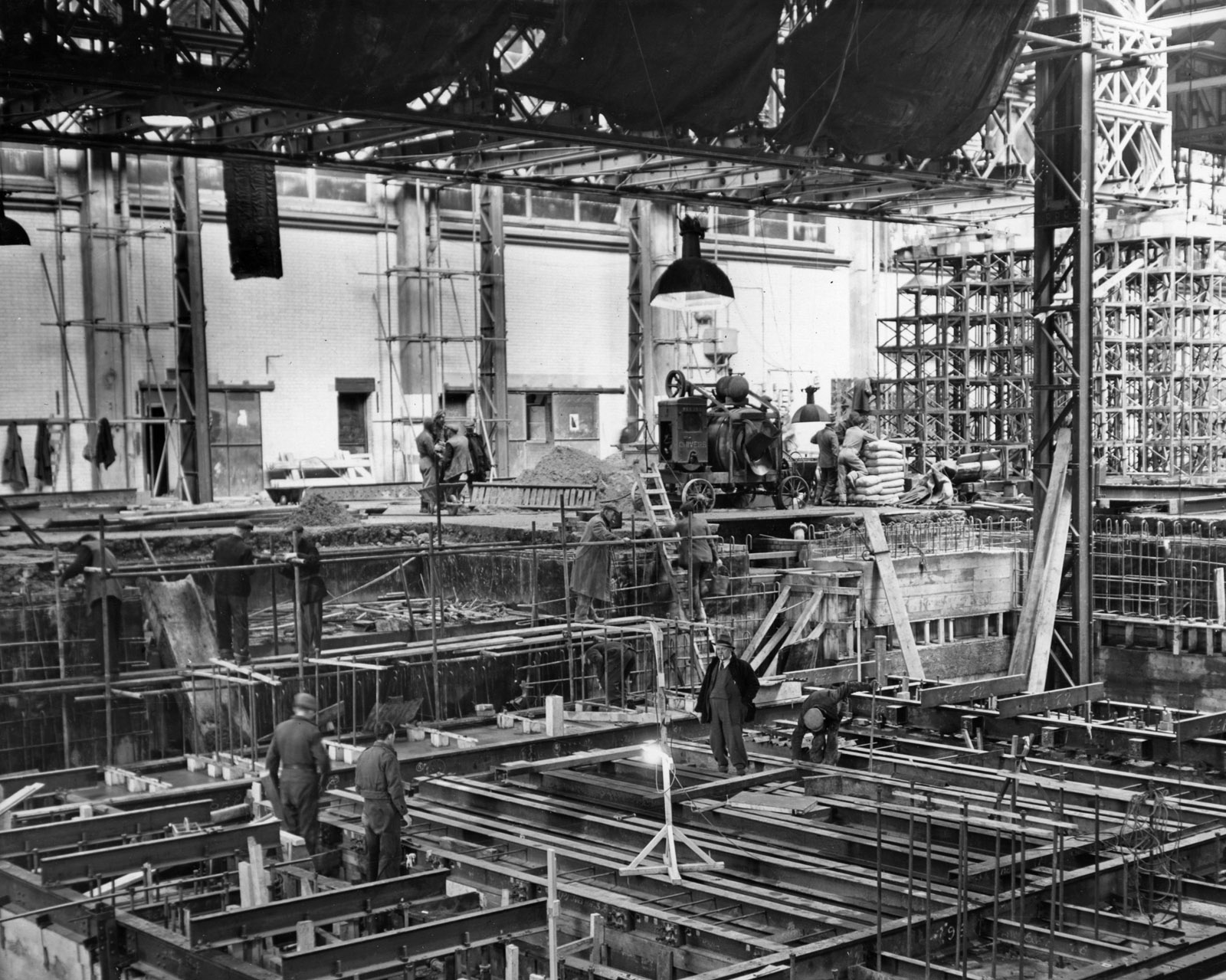
Research funded by a secret government organisation, the ‘Directorate of Tube Alloys’, led to the 1946 UK Atomic Energy Act and the beginning of the nuclear industry.
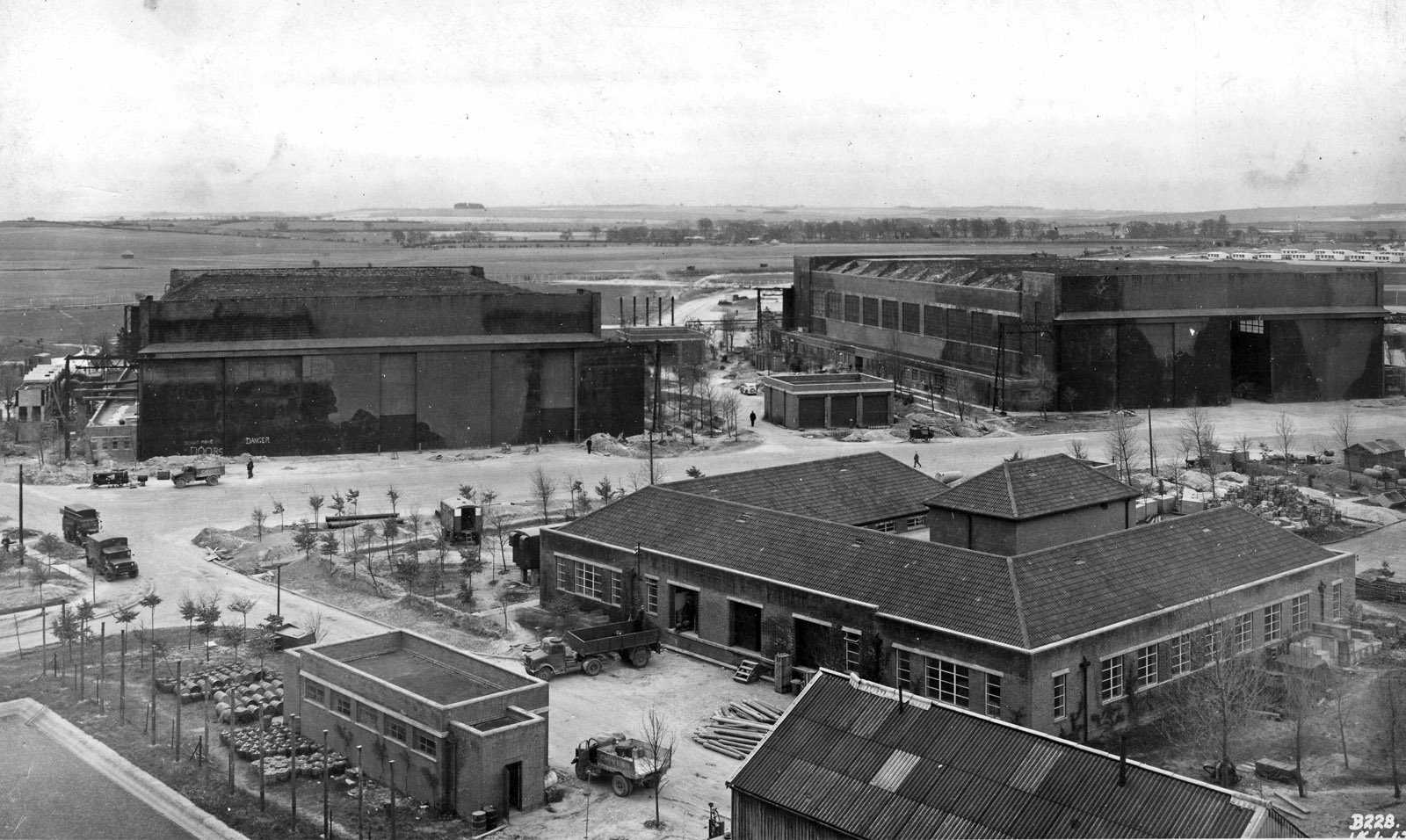
Harwell, Risley, Windscale and Springfields were constructed with the aim of producing materials for an atomic bomb. Britain collaborated with the USA and Canada to progress their research on the Manhattan bomb project. New experimental reactors at Harwell focused on nuclear research and development.
In 1940, two refugee scientists Otto Frisch and Rudolf Peierls, based at the University of Birmingham, wrote a paper on the feasibility of a uranium super-bomb and a new power source. The government’s scientific working group, given the code name of the ‘MAUD Committee’, concluded that the theory was possible and a highly secret government organisation called the ‘Directorate of Tube Alloys’ was formed. It funded nuclear research work with universities and businesses, in particular Imperial Chemical Industries (ICI), and led to the 1946 UK Atomic Energy Act.
GLEEP reactor
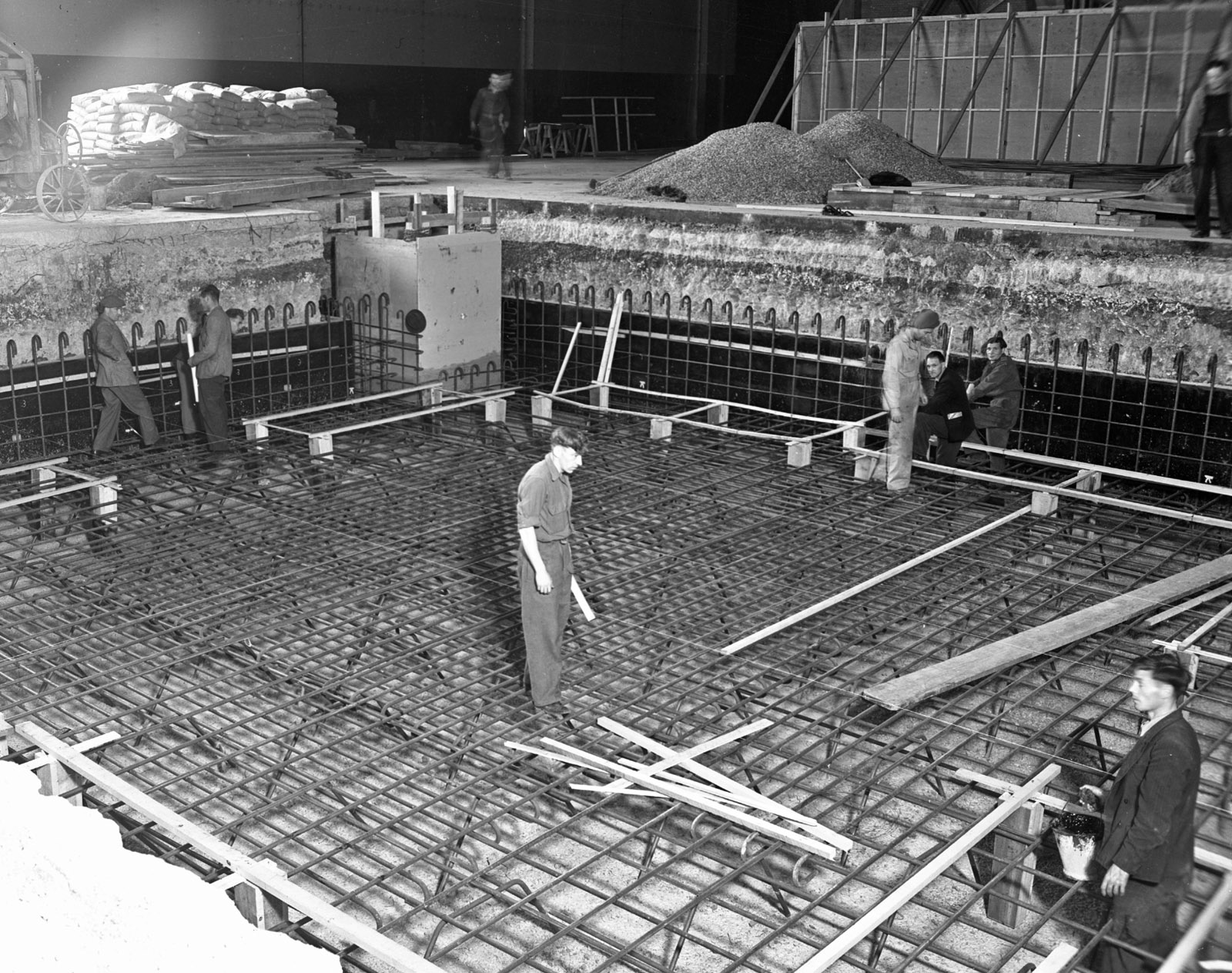
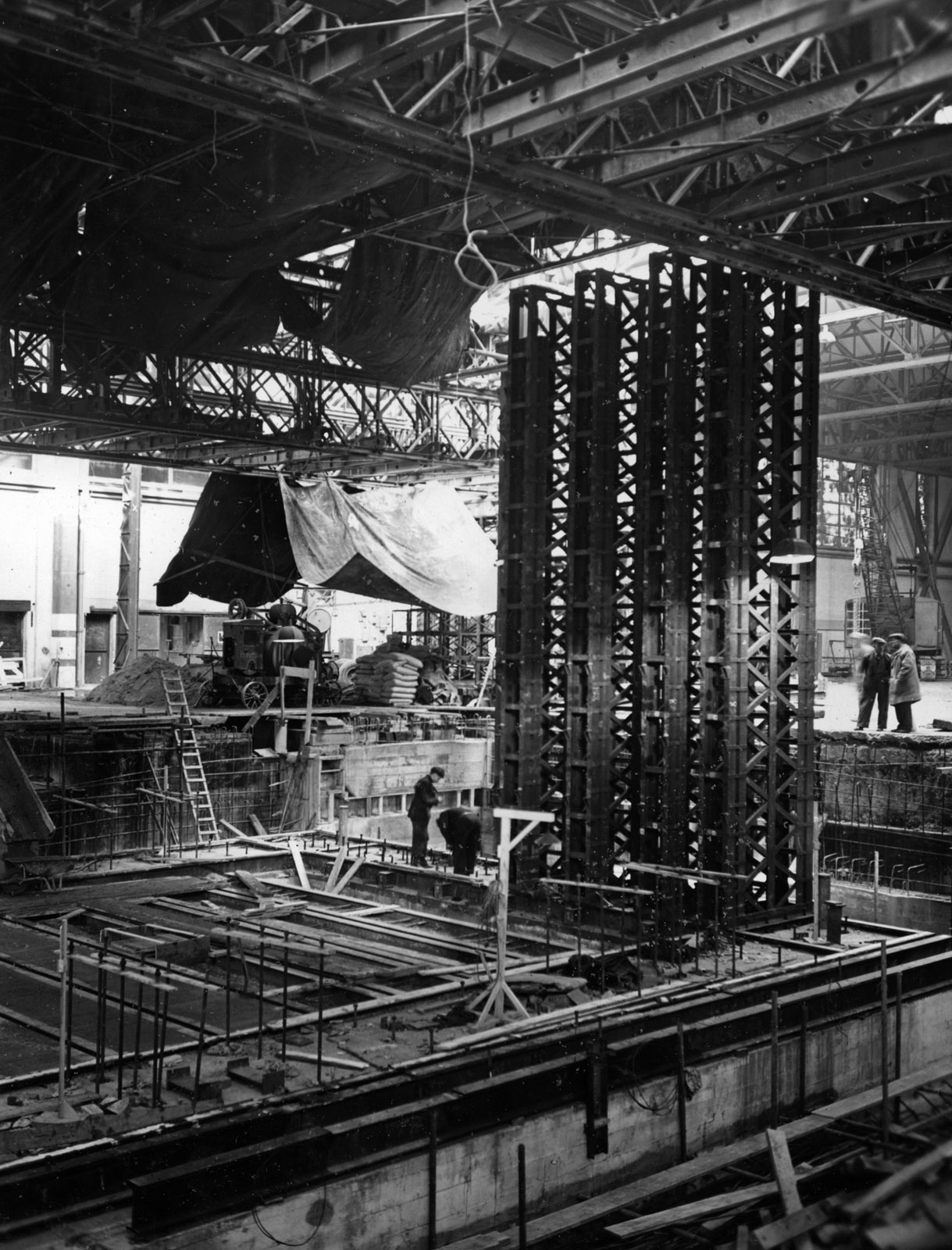
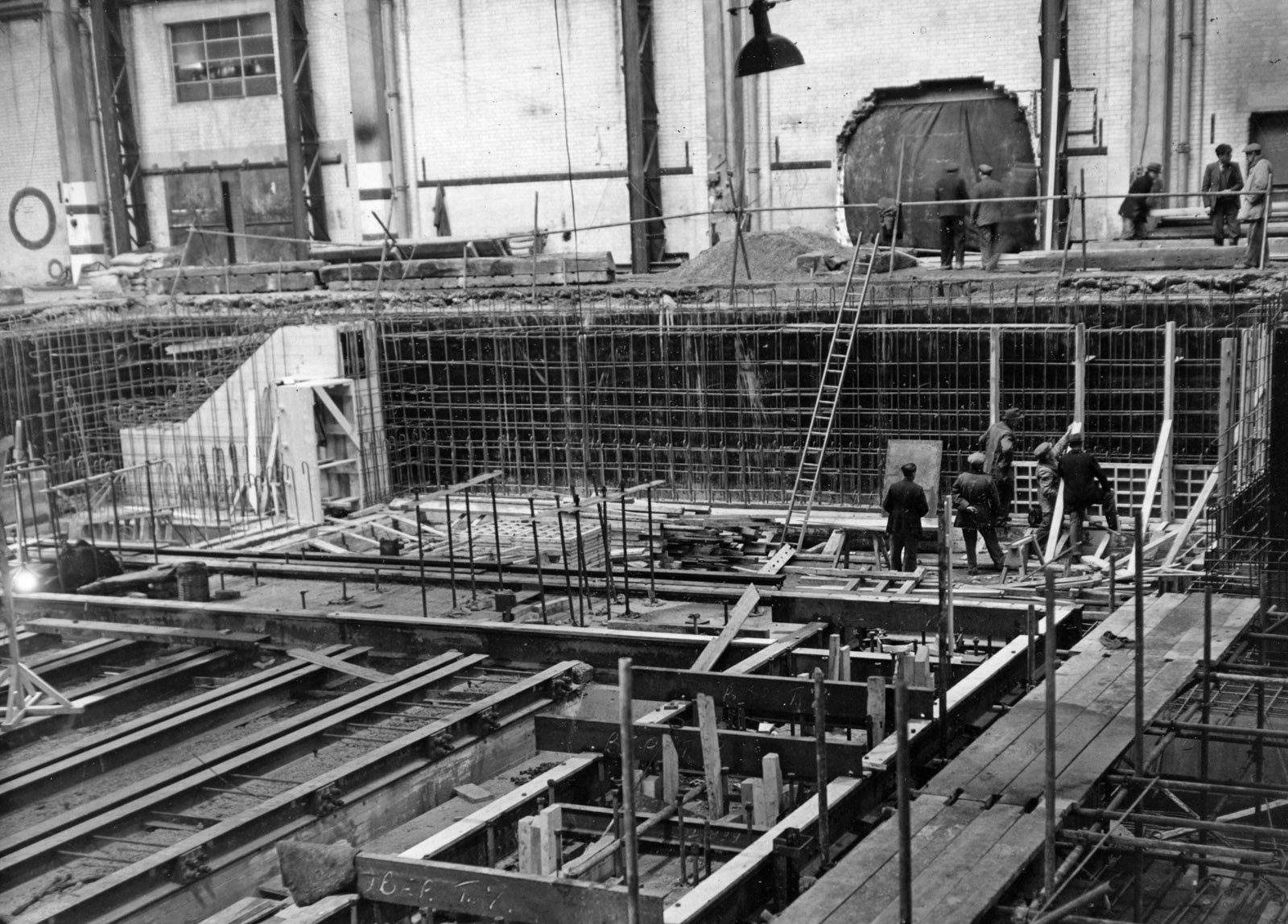
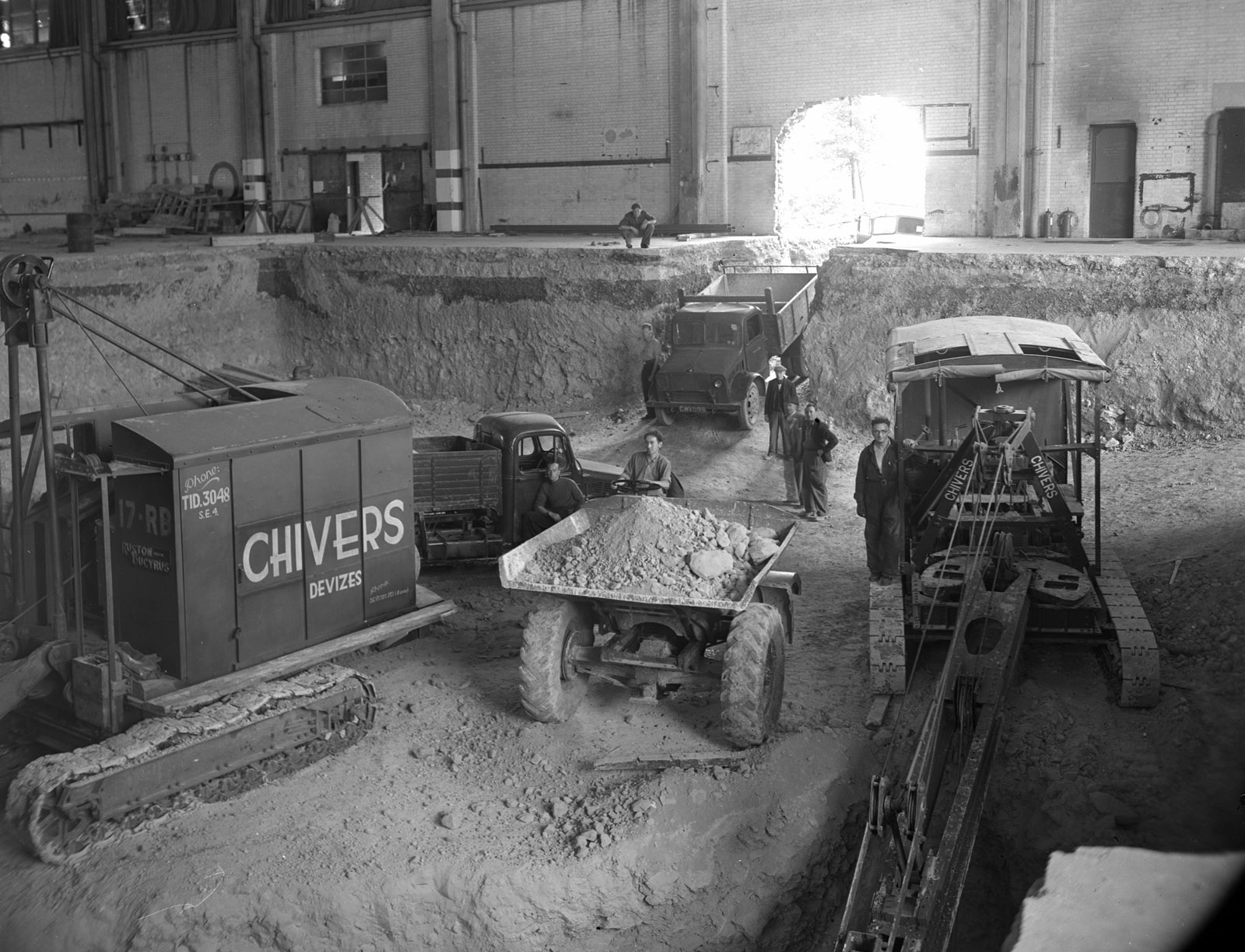
The first nuclear reactor in Western Europe, the Graphite Low Energy Experimental Pile (GLEEP) was built at Harwell, Oxfordshire in 1947. It was the first of 14 experimental reactors eventually built at Harwell and it was closely followed by the British Experimental Pile Zero (BEP0), which was Europe’s first air-cooled reactor. The aim of the reactors was nuclear research and development.
Further sites
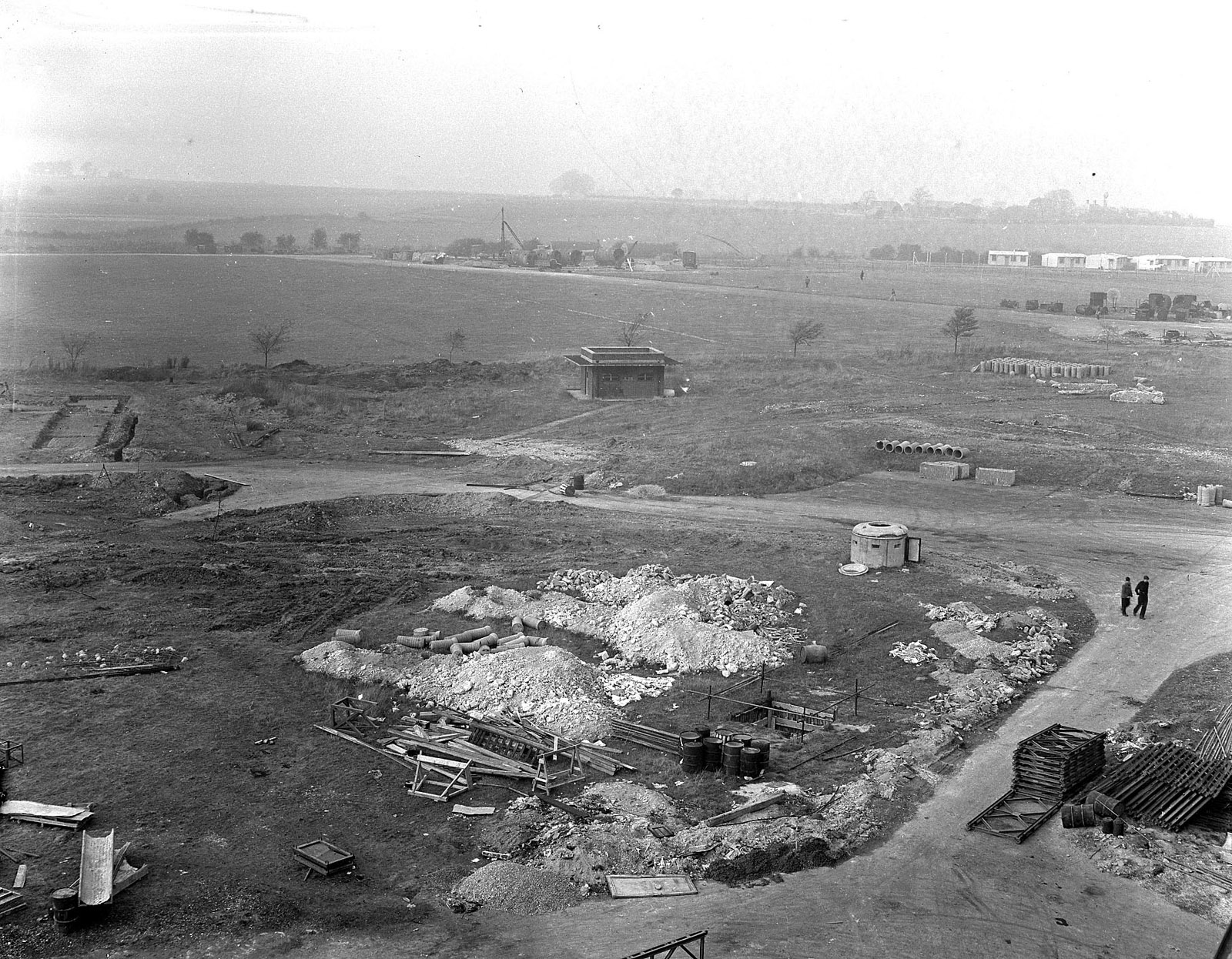
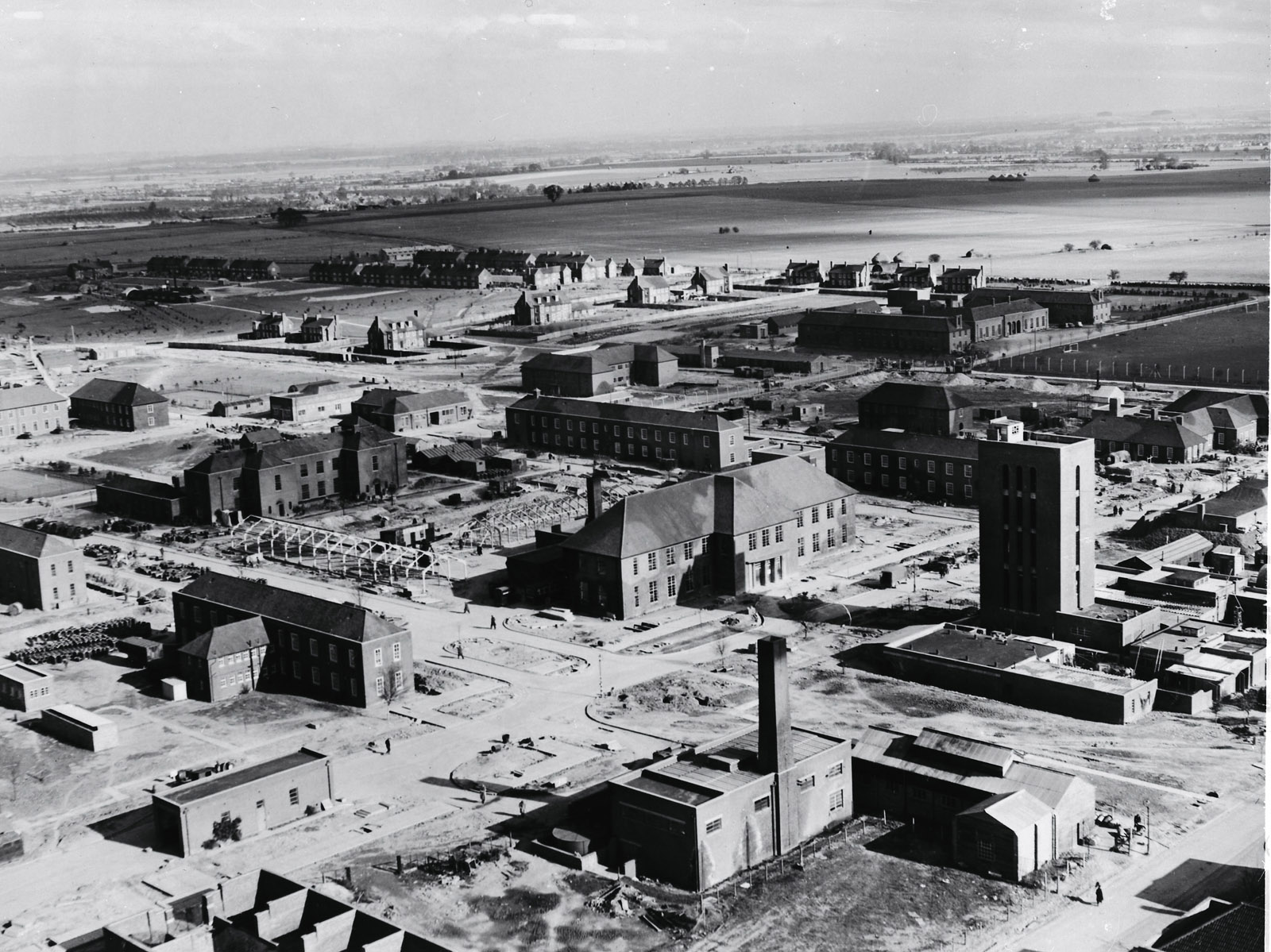
The construction of many nuclear sites started in 1946, including Harwell (Oxfordshire), Risley (Cheshire), Windscale (Cumbria) and Springfields (Lancashire), with the main aim of producing plutonium from uranium, for building an atomic bomb. Three groups were set up by the government; 1) Research, led by Sir John Cockcroft, 2) Production, led by Sir Christopher Hinton and 3) Weapons, led by Sir William Penney.
The Springfields site was conceived in 1946 and the first billet of metallic uranium was made there in 1948. As the main fuel for reactors and required for the production of plutonium, medical isotopes, and nuclear energy, uranium is the lifeblood of the nuclear industry and, without it, there would be no industry.
Britain was a world leader in nuclear research and many scientists, headed by Professor James Chadwick who discovered the neutron in 1932, went to the USA and Canada under a collaboration agreement to progress the research for the Manhattan Project. The world’s first nuclear explosion was carried out in the USA on 16 July 1945.

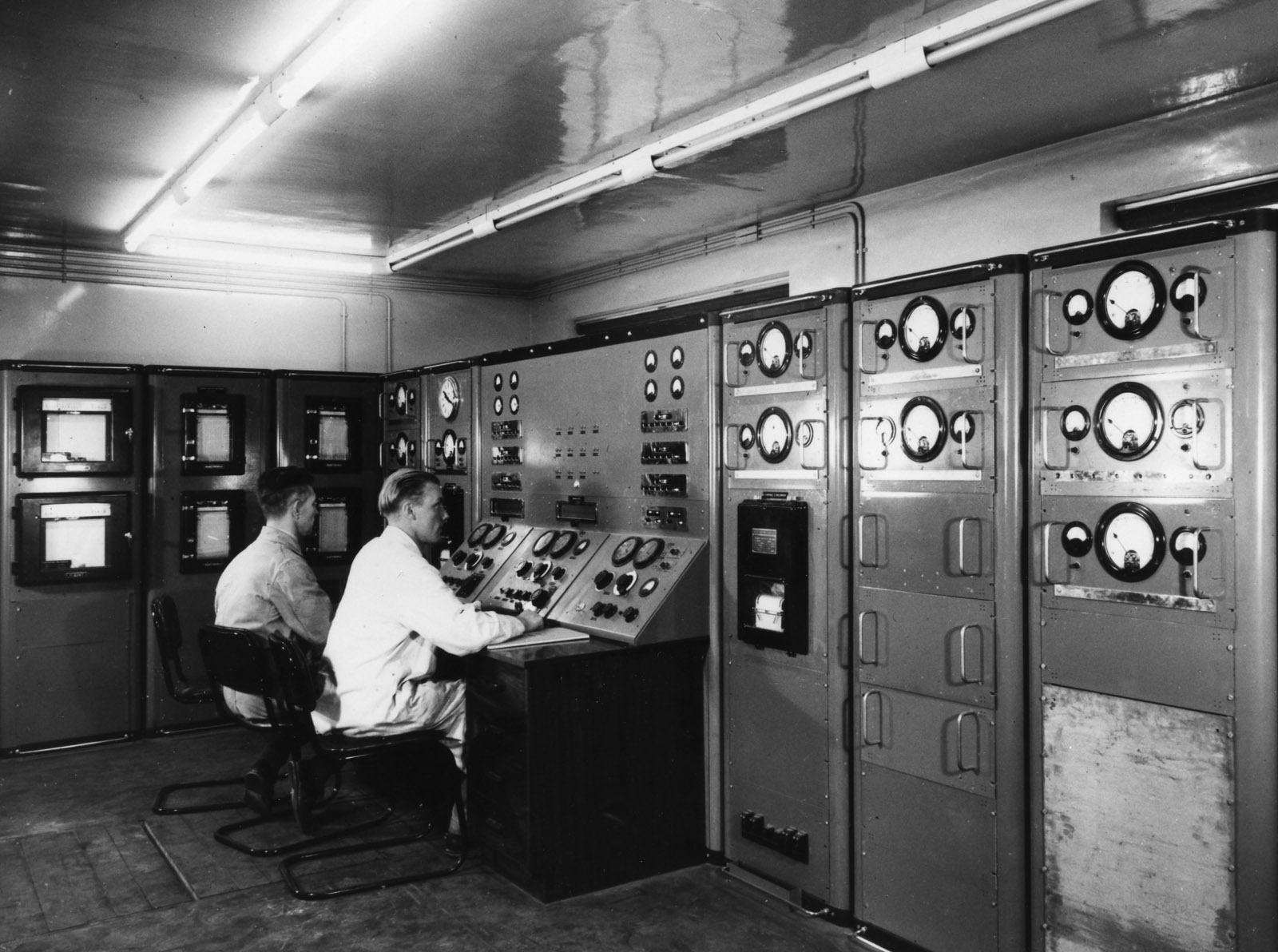
Key events of the 1940s
1947
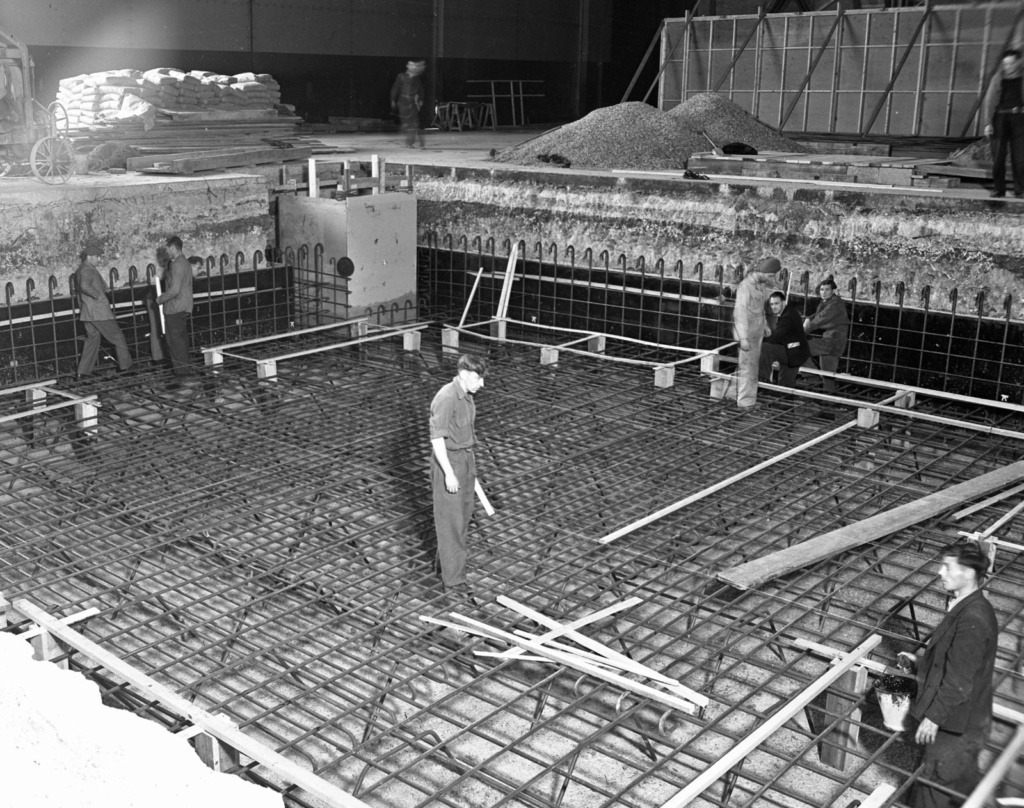
The first nuclear reactor in Western Europe was built at Harwell, Oxfordshire – Graphite Low Energy Experimental Pile (GLEEP).
1948

Harwell’s British Experimental Pile Zero (BEP0) – the first air-cooled reactor in Europe.