1980s: Trading and exploiting technology
This decade saw the first underground waste disposal site investigation by Nuclear Industry Radioactive Waste Executive (NIREX).
The planning application was rejected after a public inquiry. The Joint European Torus (JET) reactor was the focal point of the European fusion research programme, achieving its first controlled energy reaction in 1983. The UK Atomic Energy Authority launched AEA Technology as a commercial arm, generating over £50m per year for the government.
Nuclear Fusion
In the 1980s UKAEA commenced the nuclear fusion research at Culham, where the Joint European Torus (JET) reactor created a world record of 16.1 MW electricity for this type of reactor. Fusion is the release of energy from fusing light nuclei of hydrogen together at very high temperatures. This is the opposite of fission, where energy is released from splitting atoms of uranium or plutonium, using neutrons.
The Joint European Torus (JET) reactor
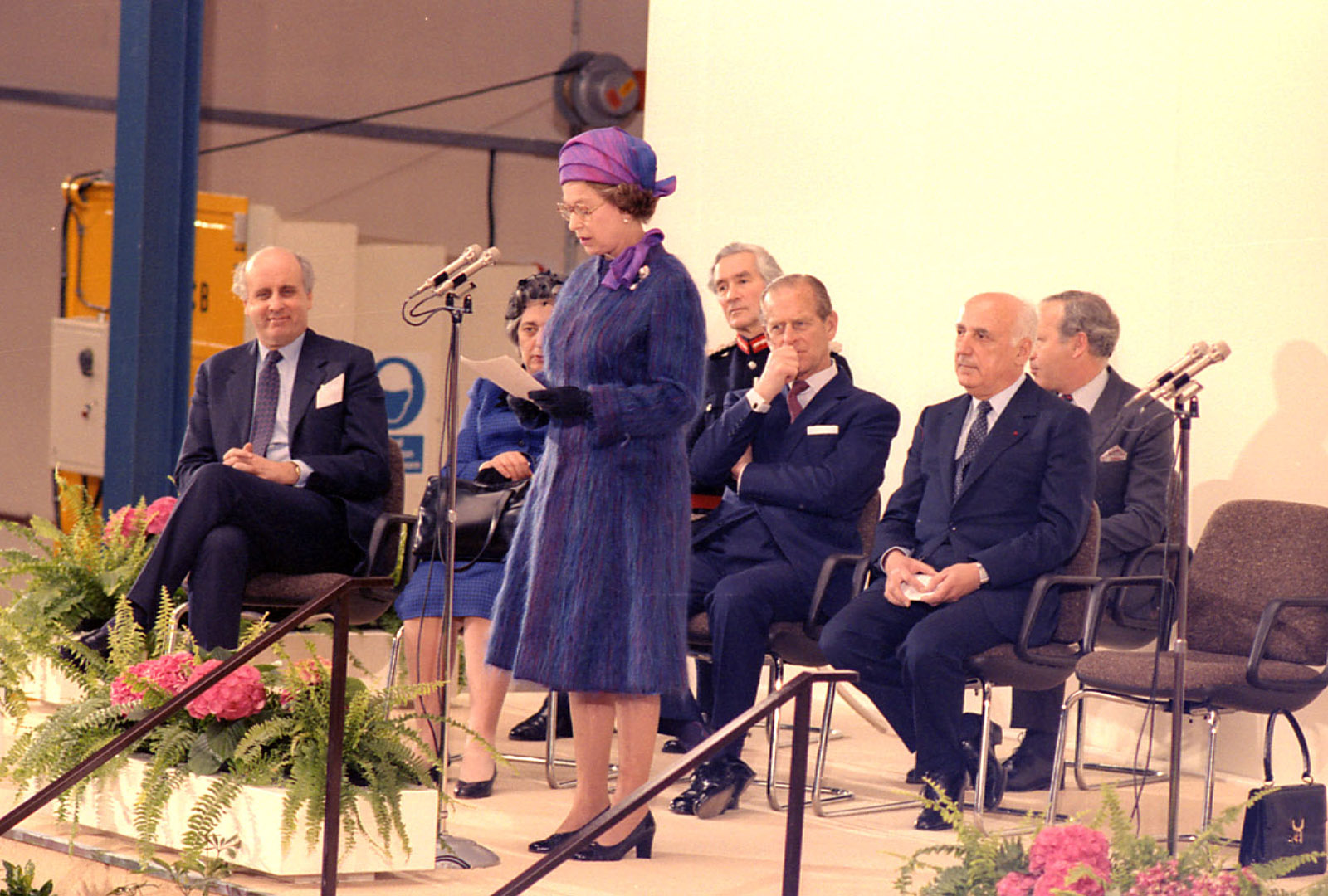
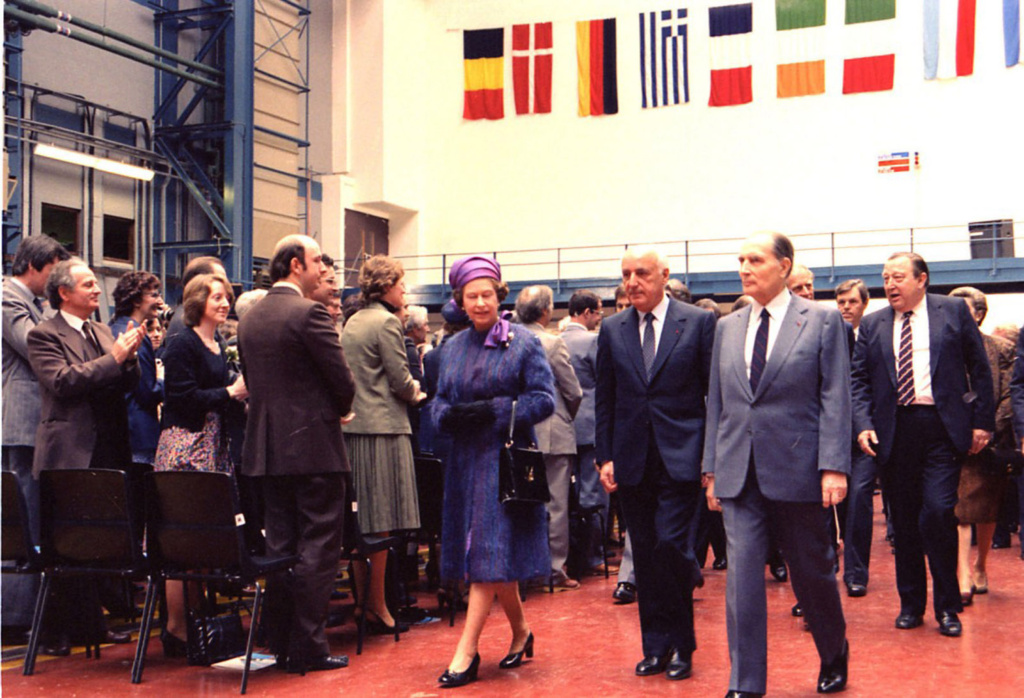
The JET reactor became the focal point of the European fusion research programme and is based at Culham, Oxfordshire. The JET reactor achieved its first controlled energy reaction in 1983 and was officially opened by HM Queen Elizabeth and French President Mitterrand in 1984.
Sellafield discharge
Following an error in the management of radioactive liquid effluent at Sellafield, Cumbria, radioactivity was accidentally discharged to sea in 1983 and contaminated the local beaches. Access to the beaches was restricted for six months. The beaches are still regularly monitored for radioactivity.
Key events of the 1980s
1983
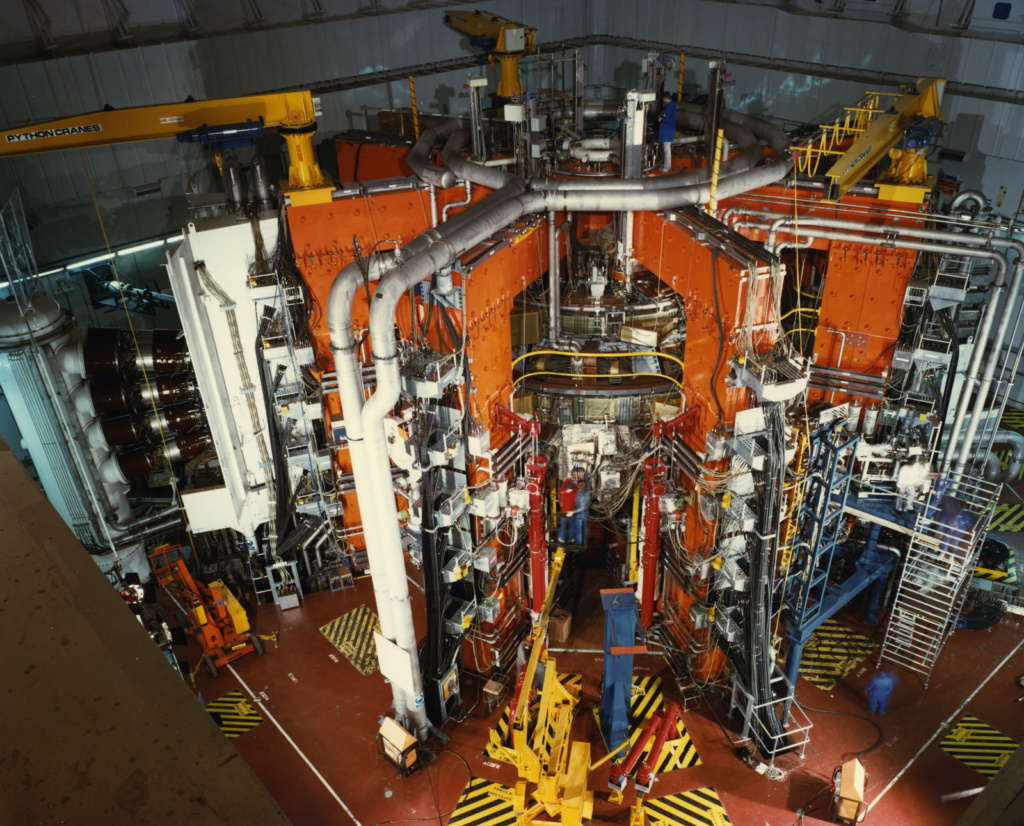
The Joint European Torus (JET) fusion reactor at Culham, Oxfordshire, started with its first controlled energy reaction.